
How Often Should You Do Contrast Therapy?
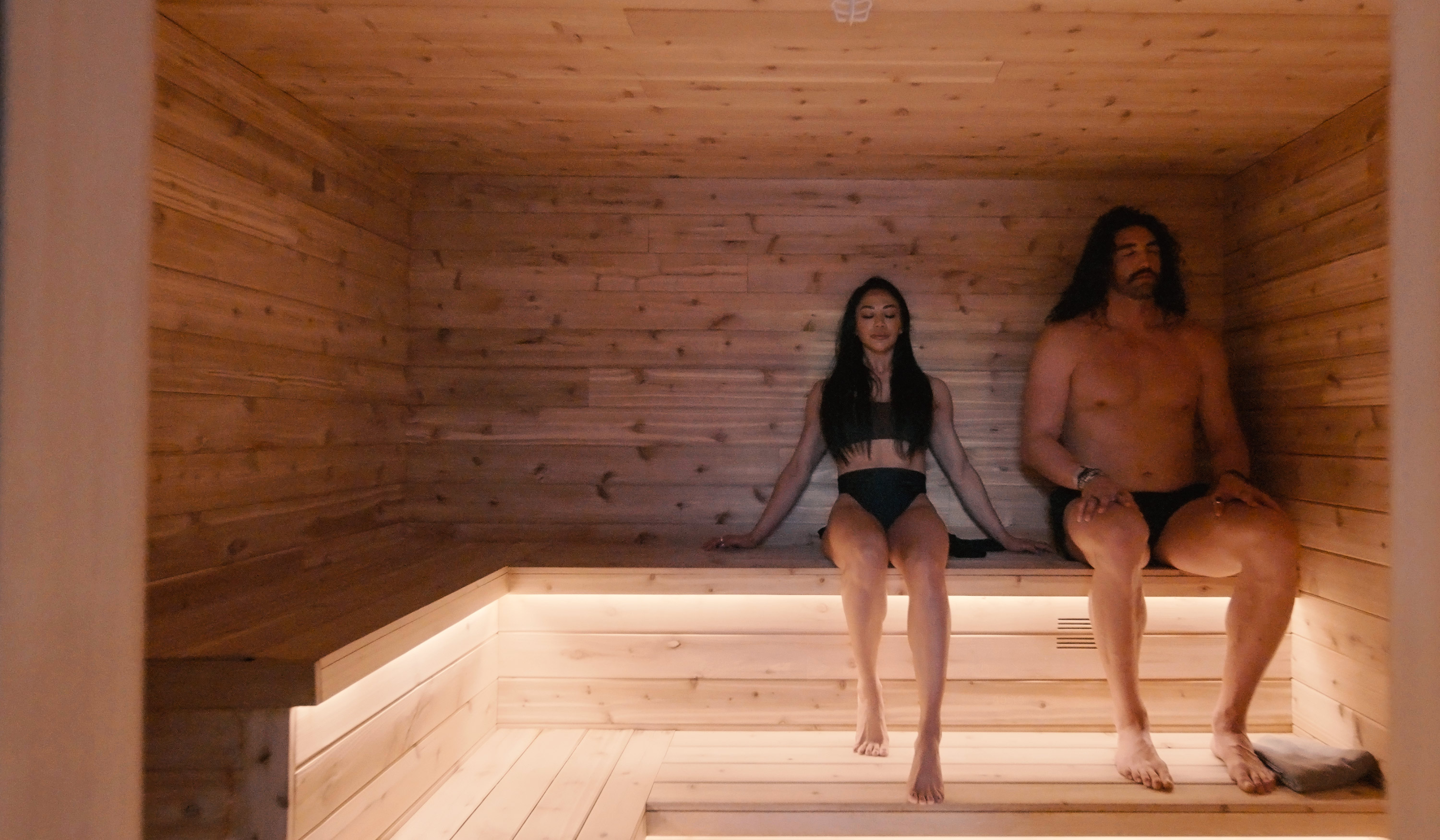
Most people do well with contrast therapy two to four times a week, though there is no single right number. Contrast therapy is the practice of moving between hot sauna and cold water to trigger a physical response in your body. The best frequency is the one you can actually keep. Consistency matters more than any perfect schedule.
What the research and Finnish tradition suggest
In Finland, the sauna is not a special event. It is a regular part of the week, often several times, sometimes daily. That rhythm is the point. The benefits people associate with sauna and cold exposure come from repeated sessions over months, not from one heroic visit.
Studies on sauna use tend to group people by how many times a week they go, and the higher-frequency groups (roughly four to seven sessions) show up often in the research. But you do not need to hit those numbers to feel good. Two or three sessions a week is a solid, sustainable starting point for most adults.
Here is the honest version: the science points to "regular" more than "exact." So pick a cadence that fits your real life, then protect it.
A simple weekly contrast therapy routine
A single round of contrast therapy looks like this: warm up in the sauna, then cool off in a cold plunge, then rest. Repeat for a few rounds. At Löyly our saunas run around 190 to 200°F with real löyly (steam from water poured over hot stones), and our cold plunges come in four temperatures: 41°F, 46°F, 51°F, and 56°F.
A basic round:
- Sit in the sauna until you feel genuinely warm, usually 10 to 15 minutes. Social sauna if you want company, silent sauna if you want quiet.
- Move to a cold plunge and stay in for a short stretch, often 1 to 3 minutes. Start at a warmer tub (56°F) if you are new and work colder over time.
- Step out and rest until your breathing settles.
- Repeat for two to four rounds total.
Because there are no time limits at Löyly, you decide how long each round lasts and when you are done. Walk in during operating hours and stay as long as you want. If you want a full walkthrough for your first visit, read our first-timer's guide.
How often should you go? Pick a level
Think of frequency in levels. Move up when the current one feels easy, not because you feel like you should.
| Level | Sessions per week | Good for |
|---|---|---|
| Starting out | 1 to 2 | New to sauna and cold, building the habit |
| Steady | 2 to 3 | Most people wanting real consistency |
| Committed | 4 to 5 | Regulars who make it part of the weekly rhythm |
| Daily-ish | 6 to 7 | People who treat it like the Finns do, part of ordinary life |
None of these levels is "better." A person who goes twice a week for a year will get far more out of contrast therapy than someone who goes six times in one week and then stops. Aim for the level you can repeat.
Can you do contrast therapy every day?
Many people do, and Finnish tradition supports it. If you go daily, listen to your body. On a tired day, do fewer rounds or spend less time in the cold. On a strong day, do more. There is no rule that says every session has to look the same.
A few practical notes:
- Hydrate. The heat pulls water out of you.
- Do not force the cold. Ease in, breathe slow, and get out before you start shivering hard.
- Space intense sessions around hard workouts if that suits your training. Some people prefer sauna after exercise, some prefer a rest day.
If you have a heart condition, are pregnant, or have any medical concern, talk to your doctor before starting a regular routine. That advice does not change based on how often you go.
Why unlimited-visit memberships make consistency easy
Consistency is the whole game, and pricing is usually what breaks it. If every visit costs money, you start rationing your sessions and skipping the days you "do not really need it." That is exactly how a good habit dies.
Our memberships remove that math. Every pass includes unlimited visits, unlimited time, and no appointments. You can come for a full contrast session or pop in for 20 minutes on the way home. It costs the same either way, which means there is no reason to talk yourself out of a short visit.
| Pass | Price | Access |
|---|---|---|
| Lö Pass | $45/month | One location, unlimited visits |
| Vettä Pass | $60/month | One location, towel service, store discounts |
| Fjord Pass | $95/month | Every location, towel service, discounts |
Do the math on frequency. A day pass is $30. If you want to go two or more times a week, a membership pays for itself quickly, and it removes the friction that keeps people from showing up. Compare the passes in detail in our membership guide, or see all options on the memberships page.
One more thing that helps consistency: location. With three Utah spots (Orem, Downtown Salt Lake City, and Fort Union in Midvale), the Fjord Pass lets you go wherever you happen to be that day. Find the one closest to you on our locations page.
Frequently asked questions
How often should you do sauna and cold plunge?
Two to four times a week works well for most people, and daily is fine if you build up to it. The exact number matters less than keeping it regular over months. Start with what fits your schedule and adjust from there.
How many rounds of hot and cold per session?
Two to four rounds is a common range: sauna until warm, a short cold plunge, then rest, repeated. Since Löyly has no time limits, you set the length yourself and stop when you feel done. There is no wrong number of rounds.
Is it bad to do cold plunge every day?
For most healthy people, daily cold exposure is fine when you keep sessions short and comfortable. Ease into the cold, breathe slowly, and get out before you are shaking. If you have any medical condition, check with your doctor first.
Do I need to book a time to come in?
No. There are no reservations, appointments, or time limits. Walk in during operating hours (Mon to Thu 6:00 am to 9:00 pm, Fri to Sat 6:00 am to 10:00 pm, Sun 8:00 am to 2:00 pm) and stay as long as you like. See our FAQ for more details.
Related reading: Cold Plunge Temperature Guide: 41°F to 56°F
Related reading: Sauna Before Bed: How Heat Improves Your Sleep
